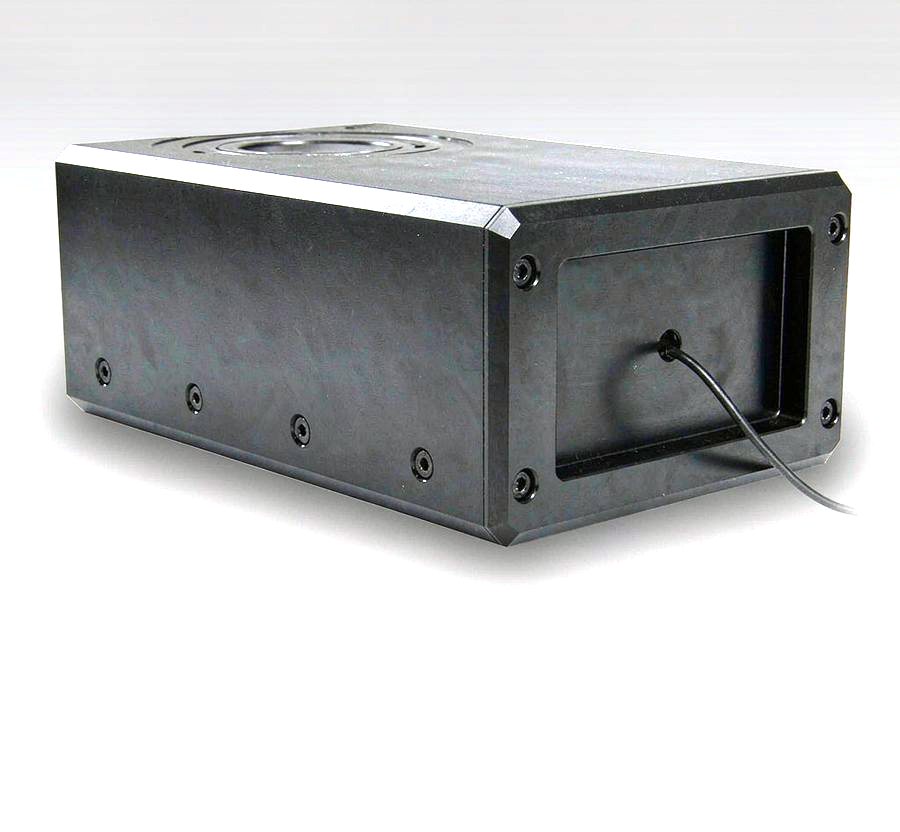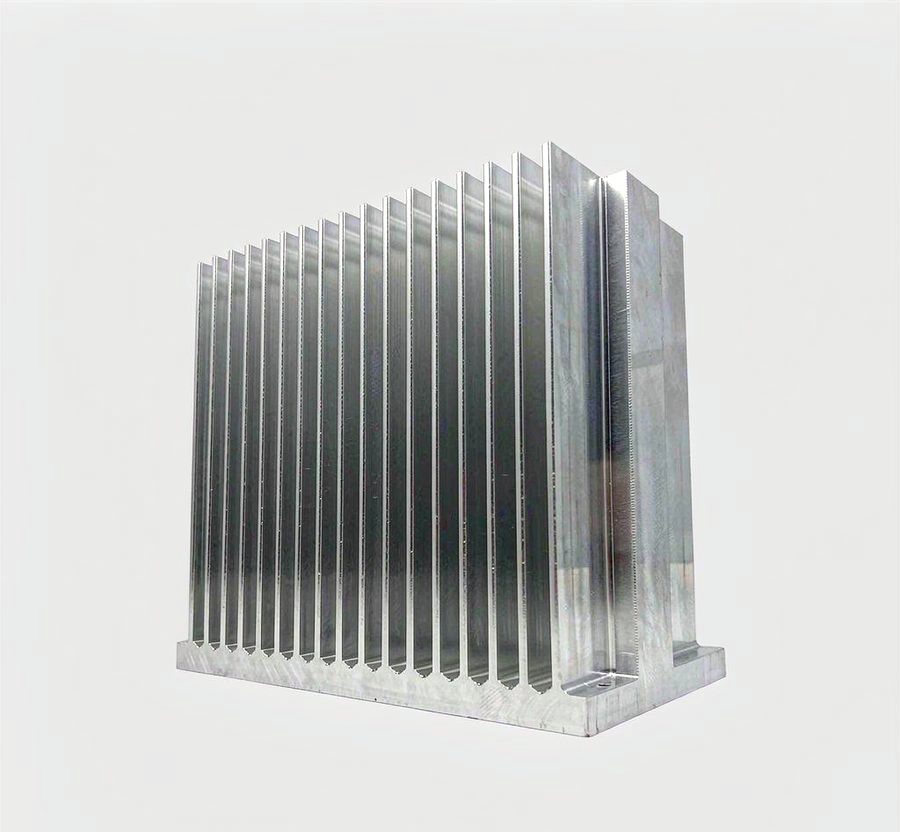
“Can you do it on the five-axis?” is a question we hear on almost every complex RFQ. The honest answer is usually: yes, but you are paying for it when a 3+2 setup would have produced the same part for less. Here is how to tell the two apart before the quote arrives.
Two different machines, one label
A conventional 3-axis mill moves X, Y and Z with the spindle vertical. Everything beyond that is fixturing: you re-clamp the part for each new face, and every re-clamp adds setup time and a fresh chance to lose datum.
A 3+2 machine — positional five-axis — tilts and rotates the table to present a new face to the tool, then locks the two rotary axes. The cut itself is still three-axis. A simultaneous five-axis machine keeps all five axes interpolating through the cut, so the tool stays normal to a curved surface as it sweeps it.
This distinction matters more than the axis count, because the price difference between the two is not the price difference between three and five.
What 3+2 buys you
Positional five-axis is fundamentally a setup technology, not a geometry technology. It wins wherever the part has features on four, five or six faces:
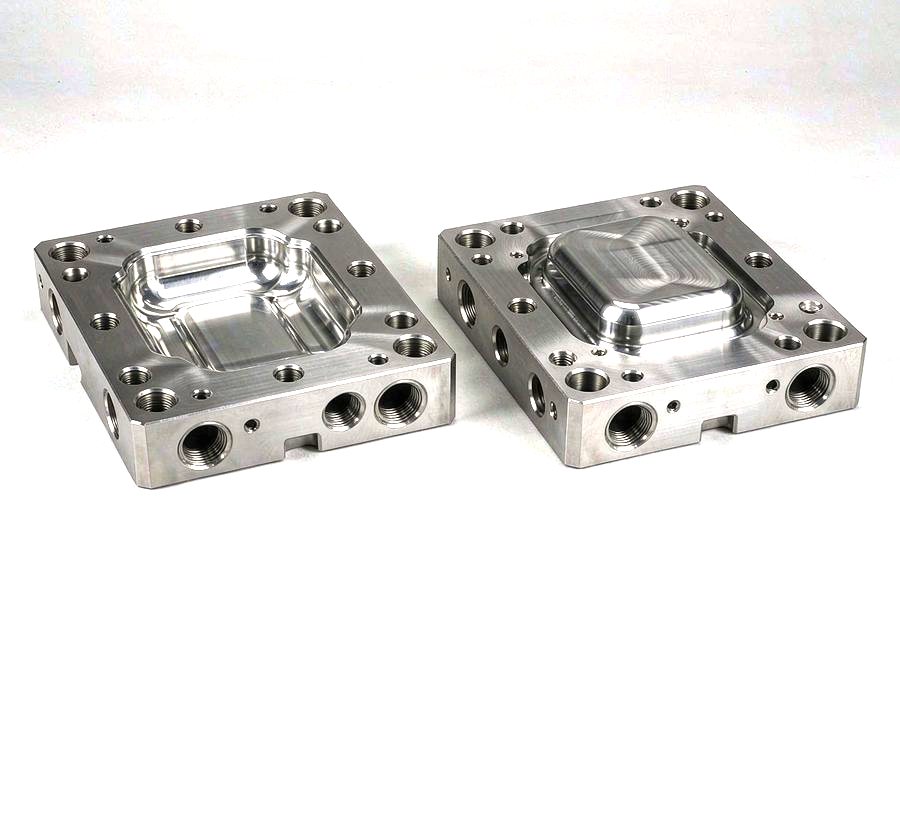
- One setup instead of five. A manifold with ports on six sides goes from five re-clamps to one. At 40–90 minutes per setup, that is most of a shift recovered.
- Better position. Features cut in one setup share one datum, so the hole pattern on the top face and the pocket on the side are related by machine geometry rather than by a fixture you have to trust.
- Short tools in deep cavities. Tilting the part lets a stubby tool reach a wall that a long, slender tool would have to chatter its way through.
- Compound angles without a sine plate. A 37° face with a 12° draft is a table rotation, not a custom fixture.
None of this changes the surface finish a three-axis cut can produce. If your part is flat, square and open, 3+2 adds nothing.
When simultaneous five-axis is genuinely required
Three cases, and they are narrower than most people expect:
- Continuous curvature. Impellers, turbine blades, propeller forms, and organic enclosures where the tool must stay normal to a surface that curves in two directions at once. Positional machining leaves stair steps that have to be blended by hand.
- Undercuts and deep shrouds. Geometry the tool can only reach by tilting while it cuts, not by tilting and then stopping.
- Single-pass blends. Where a visible transition between two faces must be one continuous toolpath, because a witness line is a cosmetic reject.
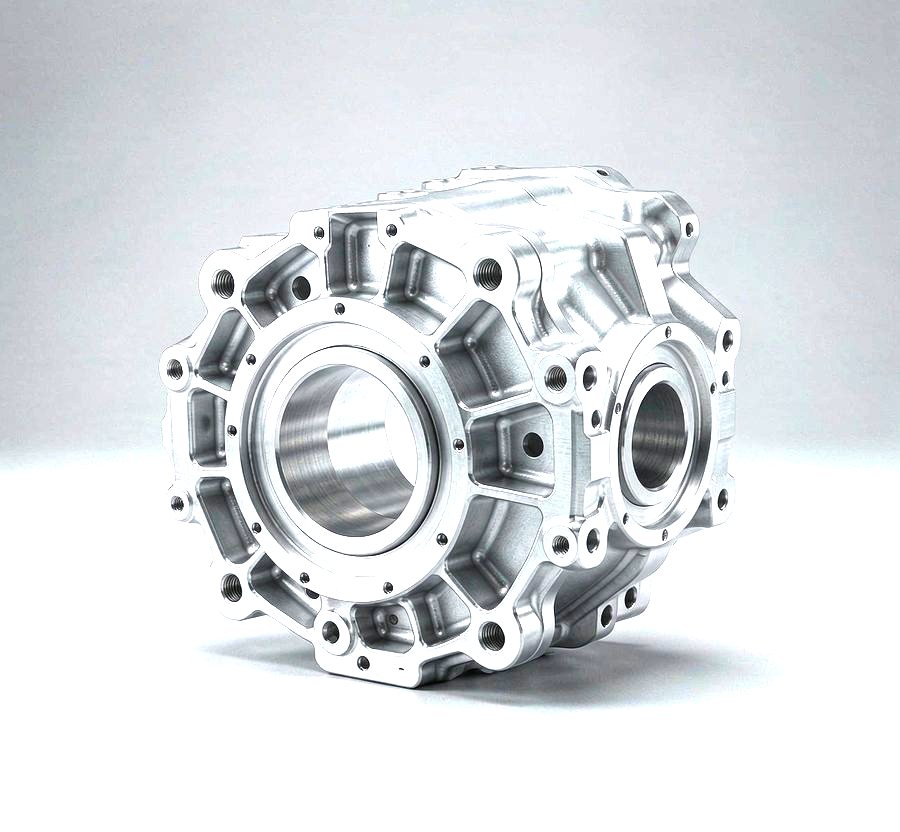
If your part is a housing, a bracket, a manifold or a plate with angled faces, it is 3+2 work. Calling it five-axis does not make it better; it makes it more expensive.
What each option really costs
| Requirement | 3-axis | 3+2 positional | Simultaneous 5-axis |
|---|---|---|---|
| Faces per setup | 1 | 5–6 | Effectively unlimited |
| Curved surfaces, tool normal | Not possible | Stair-stepped, needs blending | Single continuous pass |
| Deep cavities, short tools | Poor | Good | Best |
| Programmer time | Low | Moderate | High (collision simulation) |
| Relative hourly rate | 1.0× | 1.2–1.4× | 1.6–2.2× |
| Typical parts | Plates, brackets, covers | Housings, manifolds, multi-face parts | Impellers, blades, organic shells |
Swipe sideways to see all columns →
Read the table as a trade, not a ranking. A housing that needs six faces and no freeform surface is cheaper on 3+2 than on a three-axis machine, because you buy one setup instead of five. The same housing on simultaneous five-axis is more expensive for no functional gain.
The reverse also happens: a small impeller quoted on a three-axis mill looks cheap until you add the hand blending, the polishing and the second attempt after the blend broke through the leading edge.
Five-axis does not make a part more accurate. It removes setups, and setups are where accuracy is lost. Buy the setup reduction you need, not the machine class you have heard of.
How to tell from your own drawing
Three questions, in order:
- Are there features on more than two faces? If yes, positional five-axis is probably the cheaper route — even if the faces are flat.
- Is there a surface that curves in two directions, with a tolerance or finish callout on it? If yes, simultaneous five-axis.
- Is the part open and flat, with everything reachable from one direction? Three-axis, and insist on it.
If you are not sure, say so in the RFQ and describe what the part has to do. We quote both routings on the same drawing and show the difference, which is usually more useful than a single number you cannot compare against anything.
What we run
Three-axis vertical mills for plates and simple prismatic parts, two 3+2 machining centres with trunnion tables for multi-face housings, and a simultaneous five-axis cell for impellers, shrouded parts and contoured mould inserts. Programming is done offline with full machine simulation, so collisions are caught before the first cut rather than on the spindle.
Send the STEP and the drawing to sales@xieheprototype.com. If the geometry is ambiguous we will come back with one consolidated list of questions, and quote the routing we would actually run — not the one that sounds most impressive.